
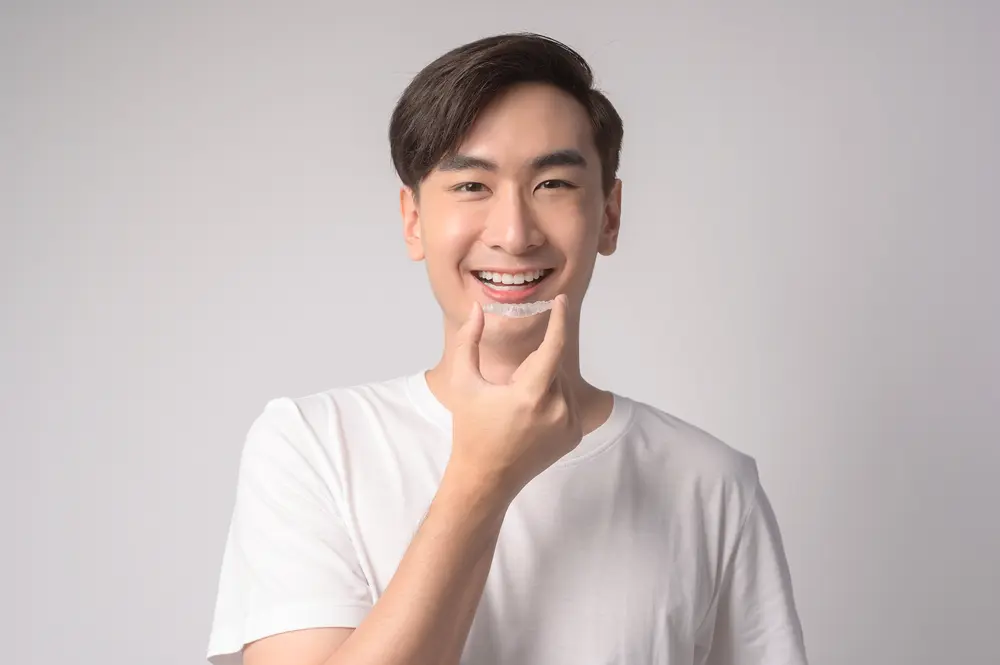
Choosing between Invisalign and metal braces usually comes down to one question: how does Invisalign work without wires and brackets? At Sweet Smiles Orthodontics in Arlington, MA, the short answer is a planned series of clear trays, each doing a small, specific job. Here is what that process looks like from the first consultation to the final retainer.
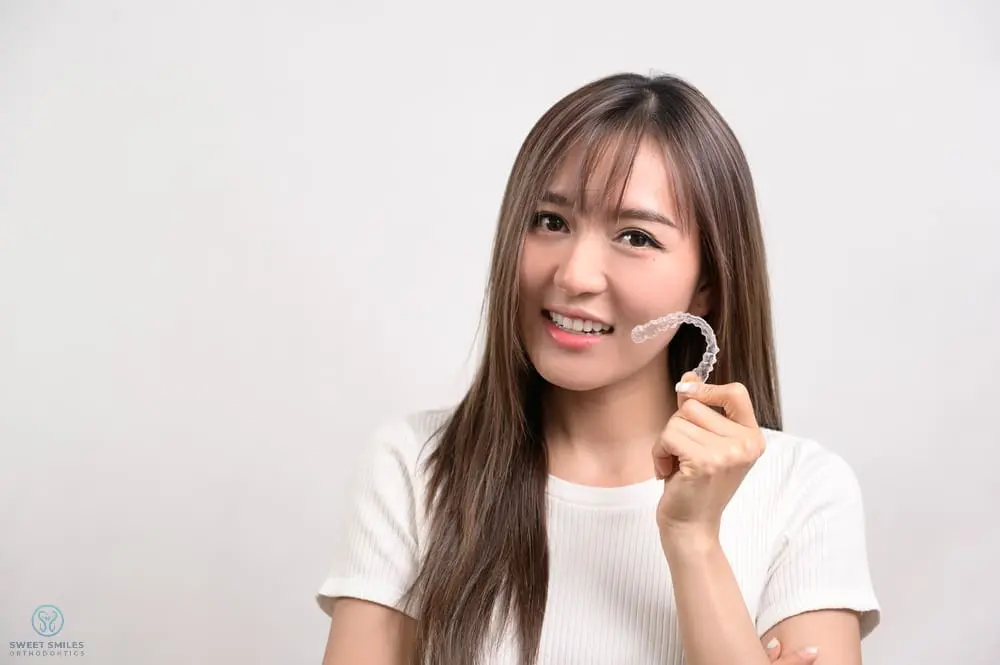
Invisalign works by moving teeth through a series of custom, removable clear trays. Each tray is shaped slightly differently from your current tooth position, so wearing it applies gentle, steady pressure that shifts teeth a small amount at a time. Trays are typically changed every one to two weeks, worn 20 to 22 hours a day, and reviewed by your orthodontist every six to eight weeks until treatment is complete.
The sections below walk through how the aligners are designed, how they move teeth, what to expect appointment by appointment, and who is (and is not) a good fit for aligner treatment.

What Is Invisalign?
Invisalign is an orthodontic treatment that uses a series of clear, removable aligners instead of metal brackets and wires. The trays are made of smooth, durable plastic and fit closely over the teeth, which makes them difficult for most people to notice in everyday conversation. Each aligner is custom-made using SmartTrack material designed to move teeth gently and predictably. Because the trays come out, patients can eat, brush, and floss much as they normally would.
How Invisalign Works: The Treatment Process
1. Consultation and Assessment
Treatment starts with a visit to Sweet Smiles Orthodontics. During this consultation, your provider discusses your goals and examines your teeth and bite, checking for common issues like crowding, gaps, overbites, or underbites. This first visit is what shapes the treatment plan that follows.
2. Scanning and Treatment Plan Creation
Instead of messy physical impressions, Sweet Smiles Orthodontics uses digital scanning to build a 3D model of your teeth and bite. Using computer imaging technology, your orthodontist can design a precise plan and show you a preview of how your smile is expected to change before treatment begins.
3. Custom Aligners and Treatment Timeline
Once your scans are reviewed, your treatment plan maps out each planned tooth movement from start to finish, and your aligners are made specifically for your smile. Most patients complete treatment in 12 to 18 months, though the exact timeline depends on case complexity. Aligners are typically changed every one to two weeks, with regular visits to check progress along the way.
4. Getting Your First Aligners
Once your aligners are ready, you will pick them up at the office. Your provider checks the fit, shows you how to insert and remove them, and sends you home with your first several sets along with instructions on wear and care. Following that wear schedule closely is one of the biggest factors in how smoothly treatment goes.
How Do Invisalign Aligners Move Teeth?
Each new tray in the series is shaped just slightly differently from the last, so putting it on applies gentle, even pressure to specific teeth. In general orthodontic terms, that steady pressure is what allows the bone and tissue around the tooth root to gradually remodel, letting the tooth shift a small amount before the next tray takes over and repeats the process.
Dr. George Jacob, one of the best orthodontists in Sunnyvale, TX, points out that the light, steady pressure from each tray often makes Invisalign feel easier and less painful than metal braces. With digital treatment planning, every aligner change is a controlled step in the overall smile transformation.
Attachments and Their Role in Treatment
For more complex tooth movements, your provider may add attachments, which are small, tooth-colored bumps bonded to certain teeth. Attachments give the aligner a better grip and are especially useful for bite corrections, crowded teeth, or rotating teeth. Because they are small and tooth-colored, they blend in with your natural teeth and keep the treatment visually discreet.
Advantages of Invisalign: Comfort and Convenience
Many patients choose Invisalign for the comfort and flexibility it offers. The smooth plastic trays do not irritate the cheeks and gums the way metal brackets sometimes can. Because the aligners are removable, there are no food restrictions to plan around, and patients can take them out for sports, music, or special events before placing them back in to stay on track.
Patient Compliance: Wearing Your Aligners
Getting the results your treatment plan is designed for depends heavily on wear time. Aligners need to be worn at least 20 to 22 hours a day, removed only for eating, drinking anything other than water, or brushing and flossing. Skipping hours slows tooth movement and can extend the overall treatment timeline, so consistency matters more than almost anything else in the process.
Routine Progress Monitoring
Patients typically return to Sweet Smiles Orthodontics every 6 to 8 weeks for check-ups. At each visit, your provider checks tooth alignment, confirms your bite is progressing as expected, and may adjust the plan or hand you your next set of aligners. These visits are also the time to raise any questions or concerns about how treatment is going.
Keeping Your Aligners and Teeth Clean
A simple daily routine keeps both your aligners and your teeth in good shape:
- Remove aligners before eating or drinking anything other than water.
- Brush your teeth after every meal before putting the aligners back in.
- Clean aligners with a soft toothbrush and cool water, since hot water can warp the plastic.
- Store aligners in their case whenever they are not in your mouth.
Sticking to this routine helps prevent staining, tooth decay, and gum irritation, so your aligners stay clear and comfortable throughout treatment.
After Treatment: Retainers and Long-Term Results
Once your last aligner is complete, your provider will check your alignment and bite one final time, often with another scan for precision. From there, most patients move into the retention phase, typically wearing a retainer at night to hold the teeth in their new position. Skipping this step allows teeth to gradually drift back, so retainer wear is what protects the results of the entire treatment.
Is Invisalign Right for Your Case?
| Case Type | How Invisalign Typically Handles It | What to Expect |
| Crowded (crooked) teeth | Mild to moderate crowding is corrected through a staged series of trays | Often a strong candidate for Invisalign |
| Gaps between teeth | Trays gradually close spacing according to the treatment plan | Often a strong candidate for Invisalign |
| Overbite | Mild to moderate cases may be treated with aligners, sometimes with attachments | Evaluated case by case at consultation |
| Underbite | May be treated with aligners depending on severity | Evaluated case by case at consultation |
| Severe or highly complex bite and jaw issues | May fall outside what aligners alone can correct | Your provider may recommend braces instead |
When Invisalign Isn’t the Right Fit
Invisalign is a strong option for most mild to moderate orthodontic cases, but it is not the right tool for every situation. For severe or very complex bite and alignment issues, your provider may recommend traditional braces instead, since some corrections are better managed with fixed appliances. Part of what a consultation is for is determining, honestly, which approach will get you to your goal most reliably.
What a Consultation Can (and Can’t) Tell You
A consultation gives your provider the chance to examine your teeth and bite directly and discuss your specific goals, which is the only reliable way to know whether Invisalign is the right fit for your case. General information like what’s on this page is a helpful starting point, but it cannot replace an in-person exam, since every bite and every case is a little different. If you have questions before booking, you’re welcome to contact Sweet Smiles Orthodontics directly.
What to Expect at Sweet Smiles Orthodontics
At Sweet Smiles Orthodontics, care is built around modern tools like 3D scanning, computer imaging technology, and clear aligners made with SmartTrack plastic, paired with a treatment plan designed specifically for your smile. Patients can expect:
- Personal consultations that focus on your goals
- Honest answers about case complexity and treatment options
- Clear pricing, no surprise fees, and payment plans that work with your budget
- Steady support from the day you start to the day you finish
Frequently Asked Questions
What is the 30-minute rule with Invisalign?
The idea is that after eating or drinking anything besides water, you should brush your teeth and clean your aligners before putting them back in. This helps keep food particles and sugars from getting trapped between your teeth and the aligner, which can otherwise lead to staining or cavities.
What age is best for Invisalign?
Invisalign works well for a wide age range, but it’s especially popular with teens and adults. For teens, it’s often a good fit once most permanent teeth have come in, usually around ages 12 to 14, and many like that it’s a more discreet option than traditional braces. Adults often choose Invisalign because it fits easily into busy professional and personal schedules.
Can you eat with Invisalign in?
It’s best to remove your aligners before eating anything besides drinking water. Eating with them in can damage or stain the trays, and taking them out also gives your teeth a natural break during meals.
How long does Invisalign treatment usually take?
Most patients complete treatment in about 12 to 18 months, though the exact timeline depends on how complex the case is. Aligners are generally changed every one to two weeks, with progress checked at regular visits along the way.
Is Invisalign treatment uncomfortable?
Most patients describe Invisalign as more comfortable than traditional braces, since each tray applies light, steady pressure rather than the tension of wires and brackets. Some snugness after switching to a new tray is normal and typically eases within a day or two as the teeth adjust.
Sources. General orthodontic and clear-aligner treatment information (manufacturer product information for Invisalign/Align Technology SmartTrack material; general patient-education material on aligner wear, attachments, and retention). Clinical observations from Sweet Smiles Orthodontics, Arlington, MA.
Related Reading
- Alternatives to Braces in Arlington, MA
- How To Get Braces Glue Off Teeth in Arlington, MA
- How To Floss With Braces in Arlington, MA
- Overbite vs Underbite in Arlington, MA
- Can Invisalign Fix Overbite in Arlington, MA
Ready to Find Out If Invisalign Fits Your Smile Goals?
Sweet Smiles Orthodontics can walk you through your bite, your goals, and what a personalized Invisalign plan would look like for your case.
Schedule Your Free Consultation
Free consultation for new patients.