
Overbite vs. Underbite in Arlington, MA: What’s the Difference, Why It Matters, and How We Fix It
If you’ve ever looked in the mirror and thought, “My top teeth stick out too much,” or “My lower jaw looks like it’s pushing forward,” you may be noticing a bite issue called a malocclusion, or a mismatch in how the upper and lower teeth (and sometimes jaws) fit together. Malocclusions are extremely common in kids, teens, and adults, and two of the most talked-about types are overbites and underbites.
This article breaks down overbite vs underbite in clear, practical terms and frames what that means for families and adults in Arlington, Massachusetts, from signs, causes, and consequences to the most effective treatment options available locally.

What is a “normal” bite?
Before we compare overbite and underbite, it helps to know what orthodontists consider a healthy bite.
A “normal” bite usually has:
- Upper front teeth overlapping lower front teeth slightly (just a few millimeters).
- Upper back teeth sitting a bit outside the lower back teeth.
- Even contact across teeth to distribute chewing forces smoothly.
Small amounts of vertical overlap are natural. Bite issues arise when overlap becomes excessive or reverses direction.
Overbite: what it is
Overbite (often called a deep bite) happens when the upper front teeth cover the lower front teeth too much vertically. As Dr. Sam Elkenawy, a well-liked orthodontist in Richmond, TX, explains, a deep overbite can lead to jaw soreness and damage if not treated early. In more severe cases, the lower teeth can bite into the roof of the mouth, or upper teeth may contact lower gum tissue.
Typical overbite signs
- Upper front teeth appear to “hide” the lower front teeth when you smile.
- The lower teeth may not show much even when speaking.
- Top teeth wear down quickly or chip.
- Lower gums may feel sore behind upper teeth.
- A “shorter” look to the lower face in some patients.
Overbites can range from mild (mostly cosmetic) to severe (functional and damaging).
Underbite: what it is
Underbite is the reverse pattern: the lower front teeth sit in front of the upper front teeth, often because the lower jaw is positioned forward or the upper jaw is underdeveloped. As Dr. Owais Naeem, a reliable orthodontist in Manassas, VA, shares, jaw growth issues are a common reason some people get underbites.
Typical underbite signs
- Lower teeth or jaw look prominent in profile.
- Front teeth touch edge-to-edge or cross over.
- Chewing feels awkward or “off.”
- Speech differences (like lisping).
- Jaw joint fatigue or discomfort.
Underbites are less common than overbites but can cause bigger functional problems if skeletal in origin.
The big difference: teeth vs. jaw direction
Here’s the simplest way to remember it:
- Overbite: top teeth (or upper jaw) sit too far forward/down over the lower teeth.
- Underbite: bottom teeth (or lower jaw) sit too far forward past the upper teeth.
Both are bite misalignments, but they usually need different mechanics and timing to fix.
Why overbites and underbites happen
Most bite problems come from a mix of genetics and environment. Some kids inherit jaw size/shape patterns from parents; others develop bite issues due to habits or growth interruptions.
Common causes of overbite
1. Genetics- Small lower jaw, larger upper jaw, or tooth size mismatch.
2. Childhood habits- Long-term thumb sucking, pacifier use beyond age 3–4, tongue thrusting.
3. Early or late loss of baby teeth- Can cause front teeth to tip or back teeth to drift.
4. Excess vertical growth patterns- Some kids develop a deep bite because the front teeth erupt too far down or back teeth don’t erupt enough.
Common causes of underbite
1. Genetics- Strong family link; lower jaw tends to grow more than the upper jaw.
2. Upper jaw underdevelopment- Can create a “reverse” bite even if the lower jaw is normal.
3. Crossbite-related jaw shifts- If the bite forces the jaw forward or sideways during growth, an underbite can worsen.
4. Trauma or growth disturbances- Less common, but jaw injury or conditions affecting development can contribute.
How these bites affect health (not just looks)
A lot of Arlington patients first ask about bite correction for cosmetic reasons. But the bigger story is long-term oral health.
Overbite consequences
- Tooth wear & chipping: upper teeth take too much force.
- Gum recession: lower gums can be traumatized by upper teeth.
- Jaw joint strain: deep bites can push the jaw back in a way that stresses TMJs.
- Higher cavity risk: crowded/overlapped teeth are harder to clean.
Underbite consequences
- Chewing inefficiency: front teeth don’t “slice” correctly; back teeth may not contact evenly.
- Speech issues: especially “s” and “f” sounds.
- Enamel breakdown: severe underbites create edge-to-edge wear.
- Jaw discomfort: skeletal underbites can overload joints.
Bottom line: both bite types can cause real functional damage over time, not just visual imbalance.
Overbite vs. underbite: how orthodontists diagnose severity
At an Arlington-area orthodontic consult, you’ll typically get:
- Digital photos
- 3D intraoral scans
- A panoramic X-ray
- Often a lateral ceph (side skull X-ray) to evaluate jaw relationships
The orthodontist checks:
- How far teeth overlap vertically (overbite)
- How far lower teeth are in front of upper teeth (underbite)
- Whether the problem is dental, skeletal, or both
- Airway, habits, and growth stage (especially in kids)
A perfectly “straight” smile can still hide a deep overbite or mild underbite, which is why imaging matters.
Best age to treat in Arlington, MA
Kids (7–10)
The American Association of Orthodontists recommends a first orthodontic check by age 7. That doesn’t mean everyone needs braces at 7, it means it’s the best time to catch growth-based issues early, especially underbites.
Why early matters:
- Overbites can often be reduced by guiding eruption and jaw position.
- Underbites, if skeletal, are much easier to influence during growth than after puberty.
Teens (11–17)
This is the most common treatment window for comprehensive correction. Growth is still active enough to help jaw relationships while also allowing full-arch alignment.
Adults (18+)
Adults in Arlington are increasingly seeking bite correction for:
- TMJ symptoms
- Visible tooth wear
- Aesthetic balance
- Pre-restorative dental work
Adult treatment works well, but severe skeletal underbites may require combined orthodontics + jaw surgery.
Treatment options for overbite in Arlington
Your specific plan depends on whether the overbite is dental vs. skeletal, and how deep it is.
1. Braces (metal or ceramic)
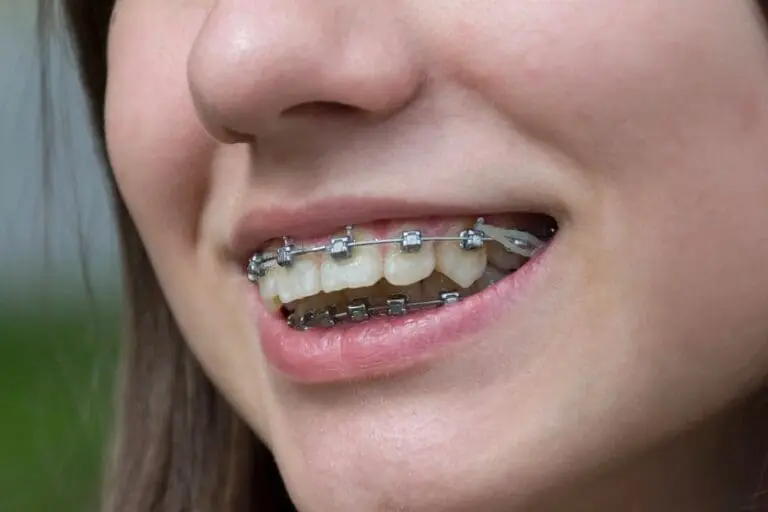
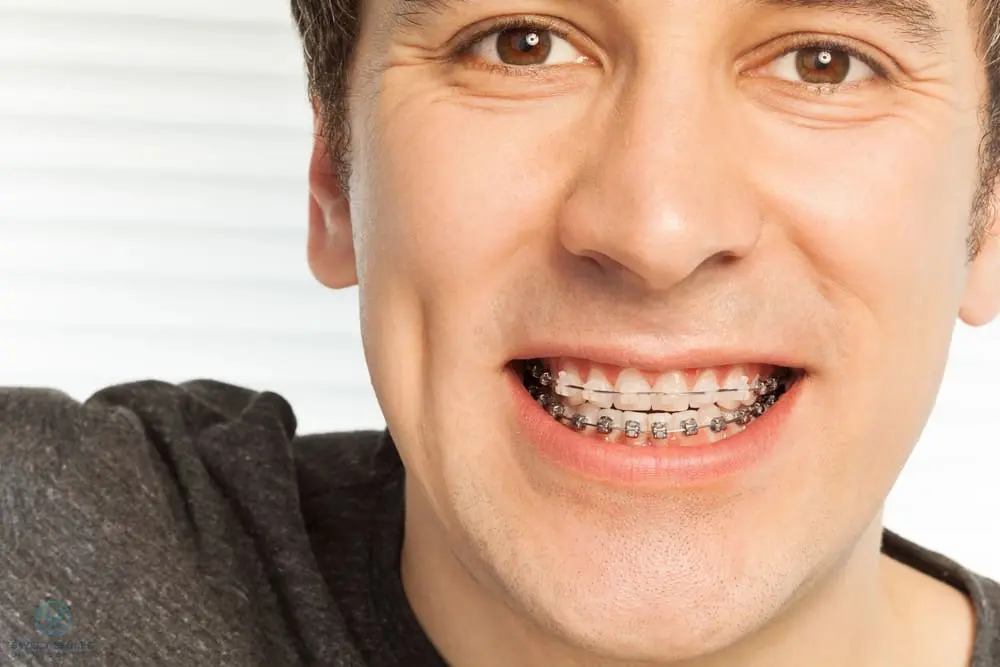
Braces remain the most predictable tool for correcting significant deep bites, especially when back-to-front tooth movement and vertical control are needed.
How braces fix overbite:
- Intrude upper incisors (move slightly up)
- Extrude molars (move slightly down)
- Correct torque/angulation
- Use elastics if needed
2. Invisalign / clear aligners
Invisalign can correct many mild-to-moderate overbites, especially in adults and motivated teens, often with attachments and elastics.
3. Growth-guidance appliances (kids)
For younger patients, tools like functional appliances or bite-opening devices help guide jaw development and tooth eruption.
Treatment options for underbite in Arlington
Underbites require special attention because many are tied to jaw growth.
1. Early orthopedic correction (children)
If caught early, orthodontists may use appliances that encourage upper jaw development and improve bite relationship, reducing the chance of surgery later.
2. Braces or aligners with elastics
For dental/mild skeletal underbites, ortho can reposition teeth and use elastics to guide bite correction.
3. Surgical orthodontics (severe adults)
When the lower jaw is significantly forward (true skeletal Class III), adult correction may require orthognathic surgery combined with braces/aligners.
This is not most cases, but for the right patient, it’s life-changing for chewing, facial balance, and joint comfort.
Real-world treatment timelines
These are ballpark ranges you’ll commonly hear in Arlington clinics:
- Mild dental overbite: 8–14 months
- Moderate overbite: 12–24 months
- Early underbite correction: 6–12 months Phase I + possible Phase II later
- Comprehensive underbite in teens: 18–30 months
- Adult skeletal underbite (non-surgical): 18–30 months; depends on limitations
- Surgical cases: usually 24–36 months total including pre/post-surgical ortho
Your orthodontist will specify based on growth stage and mechanics.
What Arlington patients should consider locally
Arlington, MA, is lucky to have several orthodontic practices within town and nearby Belmont/Lexington/Cambridge, offering a full range of modern options like braces, Invisalign, and early interceptive treatment.
When choosing care, look for:
- AAO-certified orthodontist (specialty training in bite/jaw relationships).
- Experience treating both adult and pediatric bite issues.
- Access to growth-based appliances (important for young underbite cases).
- Digital scans and bite simulation (helps you visualize results).
- Clear explanations of whether your bite issue is dental or skeletal.
Many Arlington offices offer free consultations, which is a great way to compare treatment philosophies.
Quick self-check: which one might you have?
Not a diagnosis, just a quick clue list before you book a consult.
You might have an overbite if:
- Your top teeth cover most of your bottom teeth
- Bottom teeth barely show when you smile
- You’ve noticed chipping/wear on top front teeth
- Your lower gums feel irritated
You might have an underbite if:
- Your lower front teeth sit in front of upper teeth
- Your chin/jaw looks strong or forward in profile
- You bite “edge-to-edge” with front teeth
- Chewing feels like your back teeth don’t match evenly
Either way, a proper exam is the only way to know severity and best approach.
The takeaway
Overbites and underbites are different in direction, cause, and treatment strategy, but they share one thing: when left untreated, both can lead to wear, gum problems, functional issues, and jaw discomfort.
For Arlington families, the best move is simple:
- Kids: get an orthodontic evaluation around age 7 to catch growth patterns.
Teens/adults: don’t wait for pain or severe wear—bite correction is easier earlier, but still very possible later.
About The Authors
Dr. Yajun Cui – Orthodontist in Arlington, MA
Dr. Owais Naeem – Orthodontist in Manassas, VA