
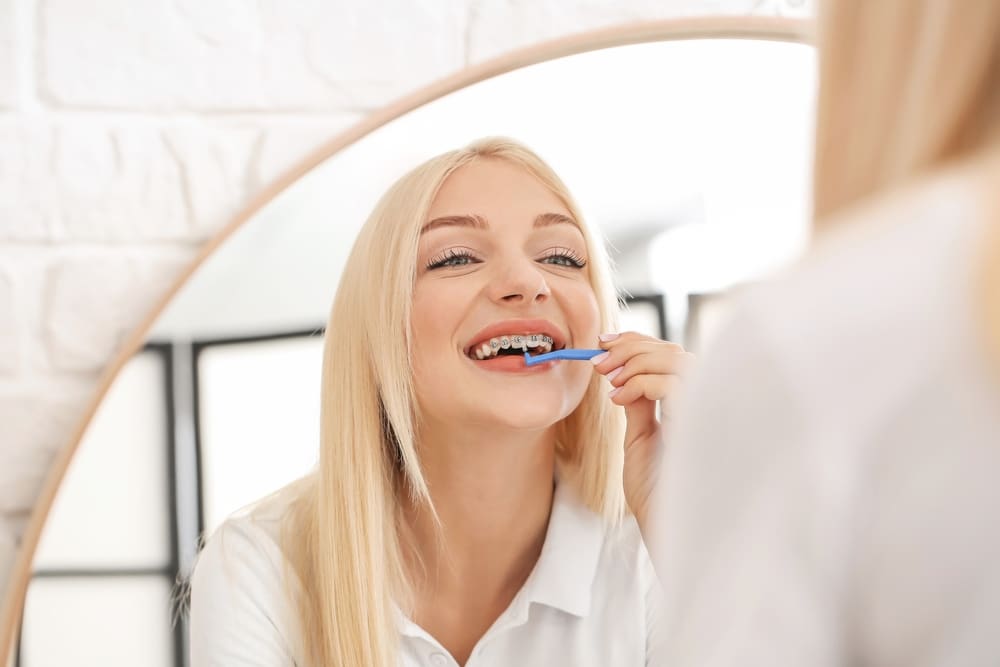
A Practical Guide to the Tools, Technique, and Habits That Keep Your Teeth and Gums Healthy During Treatment
Flossing with braces takes a few extra steps, but it is one of the most important habits for finishing treatment with healthy gums and clean enamel. Instead of simple string floss, you will use a floss threader or special orthodontic floss to slip under the archwire and clean between each tooth. It takes a little more time, but it helps prevent the buildup and irritation that brackets and wires make more likely. Here is why flossing with braces matters and the exact steps to follow.
This is how to floss with braces: thread floss under the archwire using a floss threader or stiff-ended orthodontic floss, then curve the floss around each tooth in a “C” shape and gently clean up and down along the side of the tooth and just under the gum line. Repeat for every space, then brush with fluoride toothpaste. Superfloss, water flossers, and interdental brushes make the routine easier, but they work best alongside string floss rather than in place of it.
This guide is written and clinically reviewed by Dr. Yajun Cui, DMD, PhD, orthodontist at Sweet Smiles Orthodontics in Arlington, MA.
At Sweet Smiles Orthodontics, flossing is taught, not just recommended. The team offers hands-on flossing lessons, custom braces care kits, and product suggestions for floss, threaders, and water flossers.
Below you will find the tools worth having, a step-by-step technique, tips for each type of braces, and what to do when flossing feels difficult.
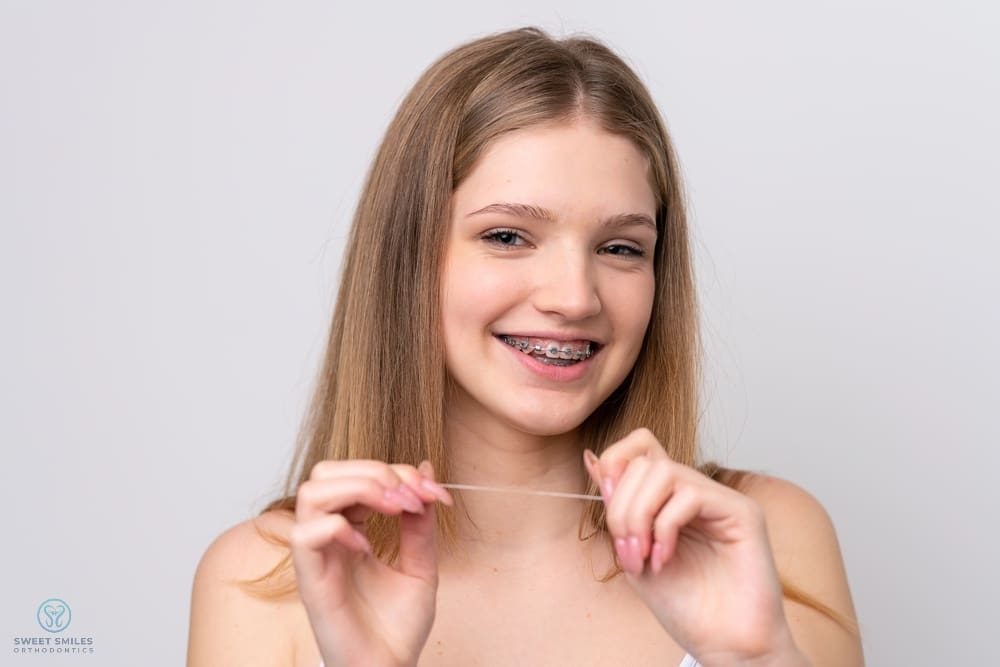
Why Flossing Matters More When You Wear Braces
Braces straighten your teeth, but they also create more places for debris to hide. The brackets and archwire form tight spaces that trap food particles, and if plaque sits too long near the gum line, it can lead to gum disease, tooth decay, and gingivitis. Warning signs include swelling, bleeding gums, and white spots on your enamel.
Daily flossing removes buildup from the areas your toothbrush misses. It lowers your risk of cavities, keeps your gums strong, and protects the teeth around your brackets and wire throughout treatment. Paired with brushing, fluoride toothpaste, and mouthwash, it forms the core of a strong oral hygiene routine.
The Best Flossing Tools for Braces
The right tools make flossing with braces much easier. Here are the main options and what each one does well.
1. Floss Threaders
A floss threader is a small plastic loop that guides floss under the archwire, much like a sewing needle. You pull the floss through the loop, slide the threader under the wire, and then floss between your teeth. Threaders are cheap, small, and simple to use, and many orthodontic practices, including Sweet Smiles Orthodontics, include them in braces care kits.
2. Orthodontic Floss
Orthodontic floss is thicker and stiffer than regular floss. Its stiff end slides under the wire without a separate threader, which makes it a good fit for working around brackets and along the gum line. It removes plaque and food debris without harming your enamel.
3. Superfloss
Superfloss has a firm tip, a spongy middle, and a soft strand. The firm tip works like a built-in threader, and the spongy section cleans around brackets and under the wire, reaching small spaces where regular floss struggles. It is also useful for cleaning under permanent retainers after braces removal.
4. Water Flosser (Oral Irrigator)
A water flosser, often called a Waterpik, uses a strong but safe stream of water to clean between teeth and around braces. It is especially helpful for people with sore gums, gum sensitivity, or limited hand control, because it washes away plaque and trapped food without sliding floss under each wire. It is not a full replacement for string floss, but it is a great addition to your braces care routine.
5. Floss Picks and Interdental Brushes
Floss picks do not fit under the wire, but they can clean the gum line and wider spaces. An interdental brush, also called a proxabrush, is a tiny brush that fits between brackets, removing plaque near the wire and cleaning hard-to-reach areas. Both travel well, which makes them handy for quick cleaning during the day.
Where to Find Flossing Tools in Arlington, MA
Floss threaders, orthodontic floss, superfloss, interdental brushes, and water flossers are available at many pharmacies around Arlington, including CVS, Walgreens, and Target. You can also order them online. Sweet Smiles Orthodontics often provides starter kits for new patients that include floss threaders, interdental brushes, and other flossing tools.
Step-by-Step: How to Floss With Braces
Flossing with braces takes more time than flossing without them, but it gets easier with practice. Here is a simple guide.
Step 1: Thread the Floss
Cut an 18-inch piece of floss and pass one end through a floss threader. Slide the threader under the wire, pull the floss through, and hold an end in each hand. This lets you reach the spaces under the archwire where food often gets trapped.
Step 2: Floss Between Each Tooth
Curve the floss around one tooth in a “C” shape and move it gently up and down along the side of the tooth and just under the gum line. Then slide the floss out, re-thread it under the wire, and repeat for each space. Take your time, and do not snap the floss or push too hard. Gentle movements protect your gums from irritation.
Step 3: Use a Water Flosser (Optional)
If string floss feels hard to use, a water flosser can help. Aim the water stream at each space between your teeth, between brackets, and along the gum line to clear food debris, plaque, and bacteria. It is also a good choice if your gums are sensitive.
Step 4: Brush Your Teeth
After flossing, brush with a soft toothbrush and fluoride toothpaste, moving the brush in small circles around each bracket, under the wire, and along the gum line. Rinse with mouthwash or warm saltwater to soothe your gums and wash away leftover debris.
Flossing Tips for Different Types of Braces
Each type of braces needs a slightly different approach. The right tools and a few small adjustments keep brackets and wires clean without much extra effort.
- Metal braces: Slide floss under the wire and clean each space carefully. Use superfloss or a threader to reach tight spots, and move slowly so you do not miss hidden debris.
- Clear ceramic braces: Ceramic brackets are strong but can chip if handled roughly, so use gentle pressure when flossing. A soft approach keeps your braces clean and safe.
- Lingual braces: These braces sit behind your teeth, so a water flosser or a thin interdental brush helps reach the back side. It takes patience, but it gets easier.
- Self-ligating braces: These braces do not use elastic ties and need less cleaning, but you still need to floss daily to protect your gum health. Consistent care supports smooth treatment progress.
How to Manage Common Flossing Challenges
Flossing with braces can take time, practice, and some trial and error, but the right tools and techniques make a big difference. Below are common issues and simple solutions to help you work through them.
Sensitive Gums
If your gums feel sore, rinse with warm saltwater. Choose a soft floss, use gentle pressure, and move slowly to avoid further irritation.
Hard-to-Reach Spaces
Use an interdental brush or proxabrush. These tools clean tight spots that regular floss may miss, and adding them to your routine makes cleaning more complete.
Trouble Handling String Floss
If string floss feels hard to manage, try a Waterpik or another water flosser. Floss picks can clean wider spaces, but they cannot replace flossing under the wire. They are especially helpful during the first weeks of wearing braces.
Oral Hygiene After Braces
When your braces come off, your teeth will feel smooth and clean, but good habits are what protect your new smile.
Wear Your Retainer
Retainers keep your teeth from shifting. Follow your orthodontist’s instructions and wear your retainer consistently to maintain your results.
Keep Flossing Daily
Even after braces removal, flossing helps prevent plaque buildup, gum disease, and tooth decay. Make it part of your nightly routine.
Visit Your Dentist Twice a Year
Regular cleanings protect your enamel and gum health, and they catch early problems before they get worse. Your dentist can also monitor how well your teeth are holding their new positions.
Flossing Tools at a Glance
| Tool | How It Works | Good to Know |
| Floss threader | Small plastic loop that guides regular floss under the archwire | Cheap, small, and simple; often included in braces care kits |
| Orthodontic floss | Thicker, stiffer floss with a stiff end that slides under the wire | No separate threader needed; works well around brackets and the gum line |
| Superfloss | Firm tip, spongy middle, and soft strand | Reaches small spaces; also useful under permanent retainers after braces removal |
| Water flosser | Water stream cleans between teeth and around brackets | Helpful for sore gums or limited hand control; not a full replacement for string floss |
| Floss pick or interdental brush | Cleans the gum line, wider spaces, and areas between brackets | Floss picks do not fit under the wire; both travel well |
When a Flossing Tool Isn’t the Right Fit
Not every tool works for every situation, and knowing the limits of each one keeps your routine effective. Floss picks are convenient, but they do not fit under the wire, so they cannot replace threading floss beneath it. A water flosser is a strong daily addition, but it is not a full replacement for string floss. With clear ceramic brackets, a heavy-handed approach can chip the brackets, and with lingual braces, plain string floss is awkward to use behind the teeth, so a water flosser or thin interdental brush is the better choice.
Some tenderness is normal when you first start flossing with braces, but your gums should not bleed heavily once flossing becomes a regular habit. If soreness, swelling, or bleeding does not settle down, let your orthodontist know so they can take a look.
What a Flossing Lesson Can (and Can’t) Cover
Written steps like the ones above are a solid starting point, but technique with braces is easiest to learn when someone watches you do it and adjusts as you go. Every mouth and every set of braces is a little different, so a guide on a page cannot tell you which tool fits your teeth best or whether your technique is reaching every space. That is where a hands-on lesson helps. If you have questions about your own routine, you are welcome to contact Sweet Smiles Orthodontics directly.
Personalized Flossing Help at Sweet Smiles Orthodontics
At Sweet Smiles Orthodontics in Arlington, MA, the team helps every patient build the oral hygiene habits that protect braces, teeth, and gums. That includes hands-on flossing lessons, custom braces care kits, and product suggestions for floss, threaders, and water flossers, along with clear instructions on proper brushing and flossing technique. The goal is simple: protect your teeth, gums, and brackets from the first day of treatment to the last.
FAQs: Flossing With Braces
How can I tell if I’m flossing correctly?
You are flossing correctly if the floss slides gently under the gum line and removes soft plaque from between your teeth. Your gums may feel tender at first, but they should not bleed heavily once you floss regularly. Each tooth should feel clean when you finish.
Can I skip a day of flossing with braces?
It is best not to skip. Braces trap more food and plaque, so missing a day can lead to gum swelling or stains around the brackets. If you forget once, simply get back to flossing the next day.
Why is flossing no longer recommended?
Flossing is still recommended. The confusion started after an old news report suggested there was not enough research to prove its benefits. Dentists and orthodontists still advise daily flossing because it removes plaque your toothbrush cannot reach.
What is the best floss for braces?
The best option is the one you will use every day. Floss threaders are cheap and simple, orthodontic floss has a stiff end that slides under the wire without a threader, and superfloss combines a firm tip with a spongy section for cleaning around brackets. A water flosser is a helpful addition to any of them.
Is a water flosser enough to replace string floss with braces?
No. A water flosser clears food, plaque, and bacteria from around brackets and along the gum line, and it is especially helpful for sore gums or limited hand control. But it is not a full replacement for string floss, so it works best as a partner to your regular flossing routine.
Sources. General patient-education guidance on flossing technique and oral hygiene with fixed orthodontic appliances. Clinical observations from Sweet Smiles Orthodontics, Arlington, MA.
Related Reading
- Alternatives to Braces in Arlington, MA
- How Does Invisalign Work in Arlington, MA
- How To Get Braces Glue Off Teeth in Arlington, MA
- Overbite vs Underbite in Arlington, MA
- Can Invisalign Fix Overbite in Arlington, MA
Ready to Build a Flossing Routine That Sticks?
Sweet Smiles Orthodontics in Arlington, MA can help you learn cleaning techniques, braces care, and oral hygiene habits that protect your teeth, gums, and brackets throughout treatment.
Schedule Your Free Consultation
Free consultation for new patients.