

Several alternatives to braces are marketed on speed, less friction supposedly meaning faster results. That’s only part of the story. Tooth movement has a biological ceiling that mechanical improvements alone can’t fully overcome, since the rate-limiting step is often how quickly bone remodels around a tooth’s root, a process with its own pace regardless of how smoothly a wire slides through a bracket.
If you’re looking for alternatives to braces in Arlington, MA: Invisalign, ceramic braces, lingual braces, and self-ligating systems like Damon are the main options, plus retainers or minor aligner treatment for small cases. Some of these options are marketed as faster due to reduced friction, but treatment speed has a real biological limit tied to bone remodeling, which mechanical improvements can help with only up to a point.
Why Reduced Friction Doesn’t Always Mean Proportionally Faster Treatment
Self-ligating systems like Damon replace elastic ties with a sliding mechanism, which genuinely reduces friction between the wire and bracket compared to traditional tie-based systems. Less friction can mean a tooth moves more efficiently toward its target position for movements where friction was actually the limiting factor.
But a meaningful share of orthodontic movement isn’t limited by mechanical friction at all. It’s limited by how quickly the bone and periodontal ligament around a tooth’s root can remodel in response to applied force, a biological process that proceeds at roughly the same pace regardless of how smoothly the wire is sliding through the bracket. For these movements, reducing friction doesn’t meaningfully speed things up, since the bottleneck was never mechanical to begin with.
What Actually Determines Whether a “Faster” Option Delivers on That Promise
Simple tipping movements, repositioning a crowded tooth with relatively low resistance, are more likely to benefit from reduced friction, since mechanical resistance genuinely plays a larger role in how efficiently that movement happens. More complex movements, significant rotations, bite correction, or anything requiring substantial bone remodeling around the root, are more constrained by the biological pace of that remodeling than by mechanical friction, which means a lower-friction system offers less of a speed advantage for these specific movements.
This is a more honest way to think about “faster” alternatives than a blanket claim: the benefit is real, but it applies unevenly depending on which specific movements your case actually needs.
Invisalign and Clear Aligners
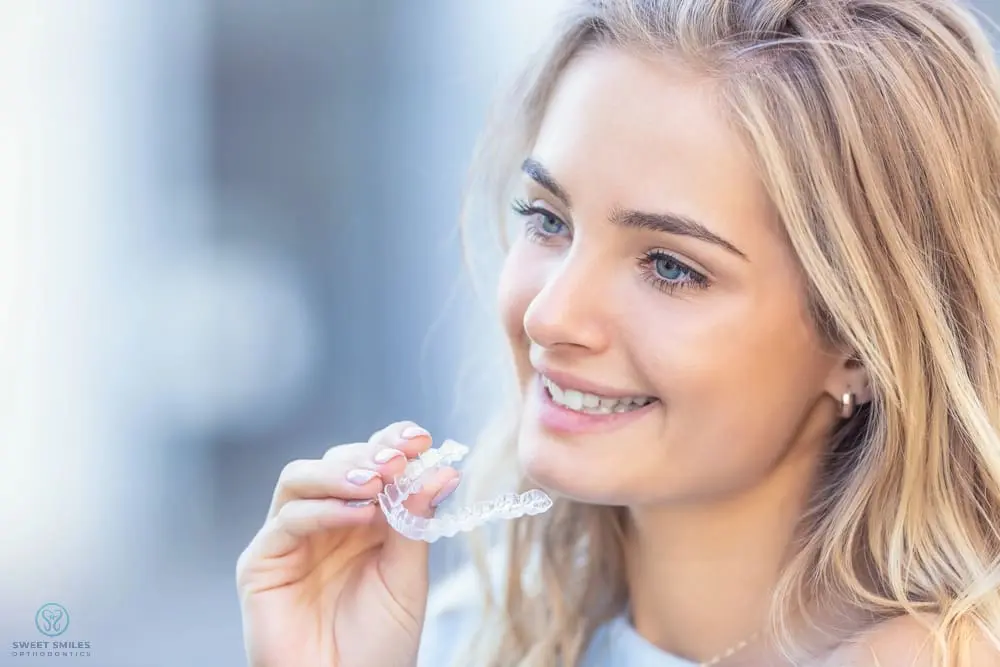
Invisalign uses a digitally planned sequence of clear, removable trays, worn 20 to 22 hours daily, to move teeth gradually. It handles mild to moderate crowding, spacing, and some bite issues well, and its removability offers genuine advantages as alternatives to braces for hygiene and diet that aren’t tied to the friction question at all.
Ceramic Braces
Ceramic braces use the same fixed bracket-and-wire mechanics as metal, with tooth-colored material for a less visible appearance. They treat a similar range of cases to metal braces, since the underlying biomechanics, friction included, are largely comparable to traditional metal systems rather than to self-ligating designs specifically.
Lingual Braces
Lingual braces mount brackets behind the teeth, making them fully hidden from the front. They use standard bracket-and-wire mechanics, adapted for a more technically demanding fitting process given their placement, and are a strong option for patients prioritizing complete discretion.
Retainers and Minor Correction
Not every case needs full treatment. Dr. Danielle Godley, an orthodontist at Godley Family Orthodontics in Zionsville, IN, notes that a retainer or a limited aligner device can sometimes correct small shifts or mild spacing without the time or cost of comprehensive treatment, which is worth asking about if your concern is limited in scope. Once active treatment of any kind ends, a retainer is essential for keeping the result in place while the bone finishes stabilizing.
What Veneers Can and Can’t Do
Veneers change the appearance of teeth, covering chips, gaps, or discoloration, but they don’t reposition teeth within the jaw. A veneer is a cosmetic solution layered over existing tooth position, not a substitute for orthodontic movement, which is worth understanding clearly before choosing between the two for a case that actually involves misalignment rather than a purely cosmetic concern.
Choosing the Right Option
The right choice depends on which specific movements your case needs, how much visibility bothers you, and your daily habits and budget, not on which option carries the strongest “faster” marketing claim. An evaluation with digital imaging is what actually determines which specific movements your case requires and which options can deliver them efficiently.
Frequently Asked Questions
Are self-ligating braces like Damon really faster than traditional braces?
For some movements, particularly simple tipping where friction is a real limiting factor, yes, to a degree. For movements more constrained by biological bone remodeling, the friction reduction offers less practical speed benefit, so the answer depends on your specific case.
Can veneers fix crooked teeth?
No. Veneers change the appearance of the tooth surface but don’t reposition teeth. For actual alignment correction, aligners or braces are needed; veneers can be considered afterward for purely cosmetic refinement if desired.
Is Invisalign a good alternative if my case involves bite correction, not just crowding?
Often yes, for mild to moderate bite issues, using attachments and sometimes elastics. More significant bite discrepancies may still need braces or a combination approach, which an evaluation can clarify.
How do I know which alternative actually fits my case?
A digital scan and exam identify the specific movements your case requires, which is a more reliable guide than general marketing claims about speed or visibility for any single option.
Sources. General orthodontic biomechanics regarding friction reduction and bone remodeling rate limits in tooth movement; clinical and administrative observations from Sweet Smiles Orthodontics, Arlington, MA.

Related Reading
Get an Honest Assessment of What Will Actually Speed Up Your Case
Sweet Smiles Orthodontics will evaluate which specific movements your case needs and which options genuinely offer a speed advantage for those movements, not just a general marketing claim.
Book Your Free Consultation
Free consultation for new patients.